Recovery Mats & Pads
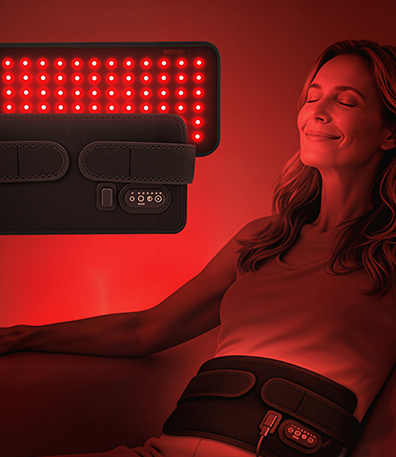
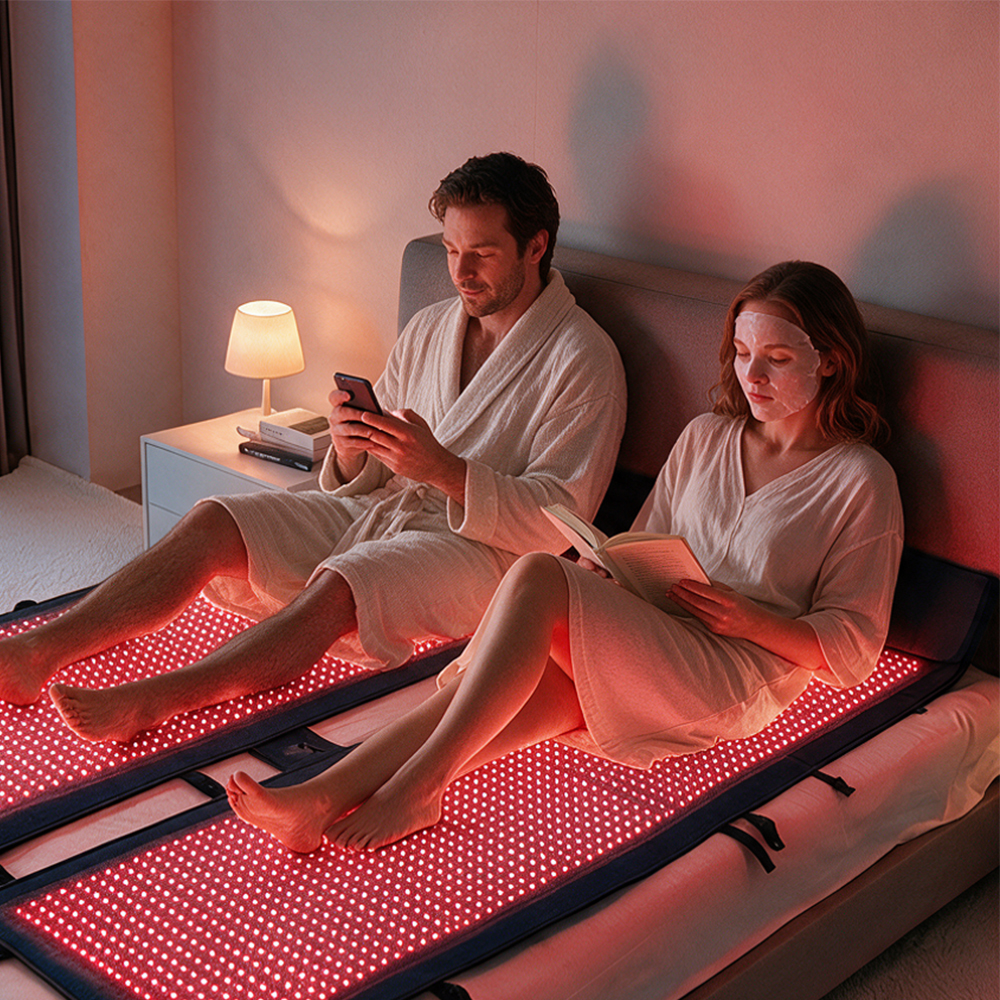
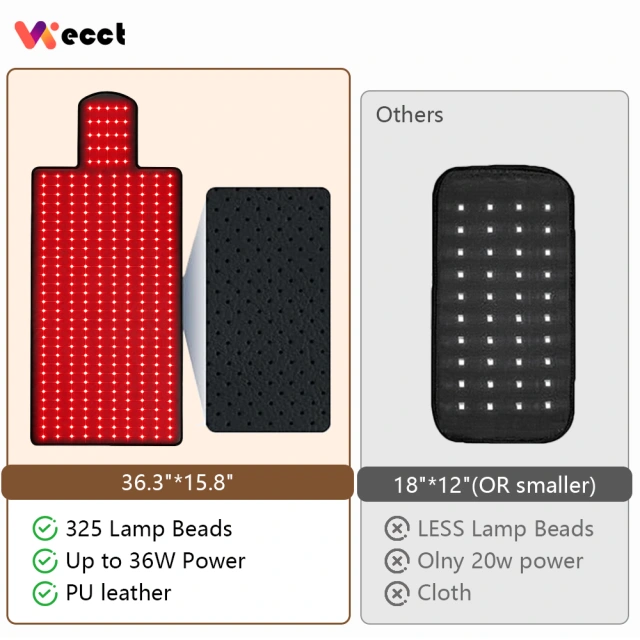
Post-training recovery tools you lie on. 240 to 1410 LEDs on a wipeable surface, built around the twenty minutes after your session rather than around a wellness routine. Roll it up, put it anywhere, use it the same evening.
Showing 6 of 6 devices
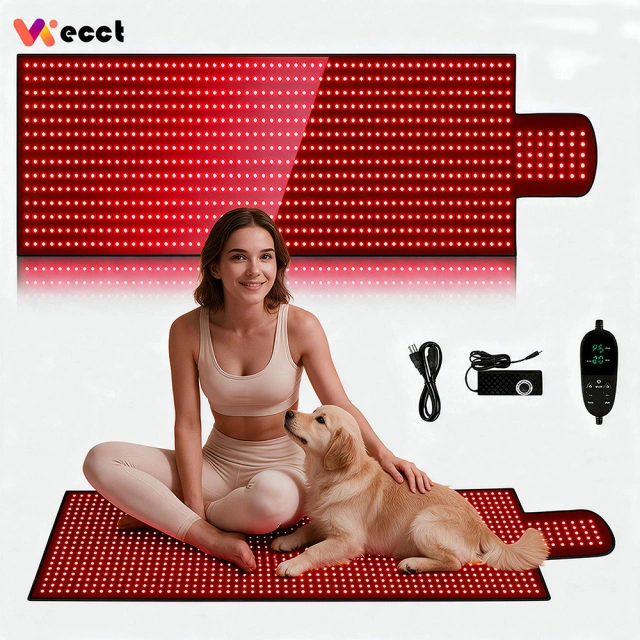
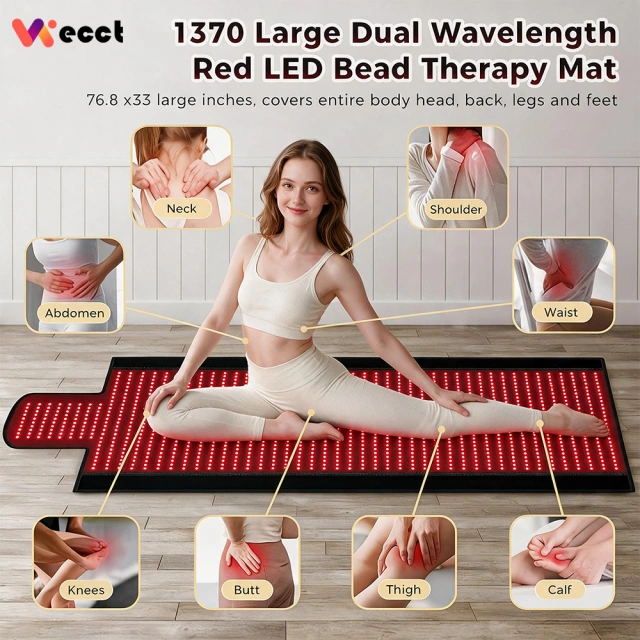
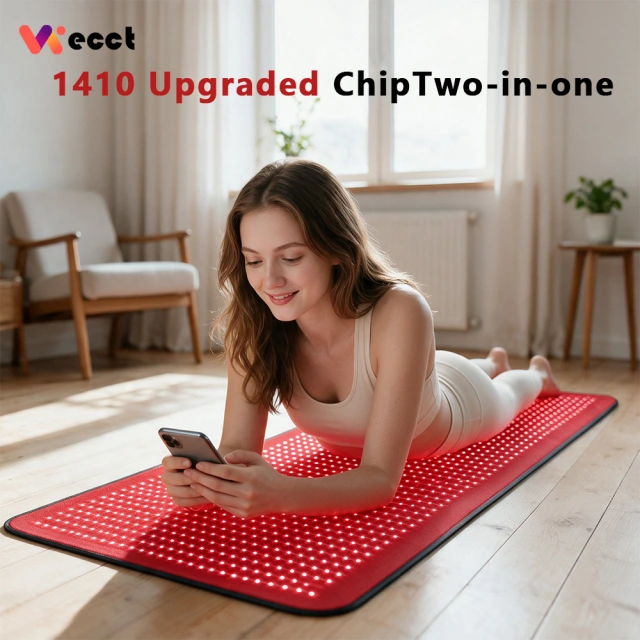
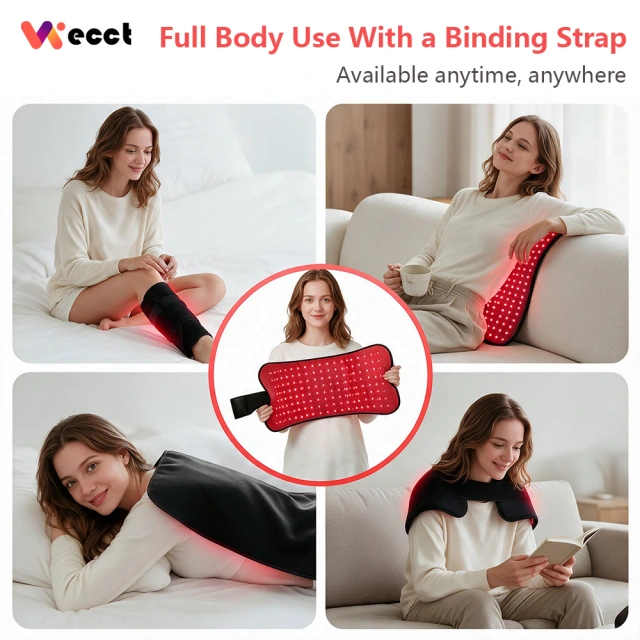
How to Choose
- Legs and lower back after a run — the 31-inch pad covers the target area without taking over the room.
- The whole posterior chain after lifting — step up to the 71-inch mat so back and both legs are lit at once.
- Small room, or you take it with you — look at the roll-up models that pack to 16 inches or less.
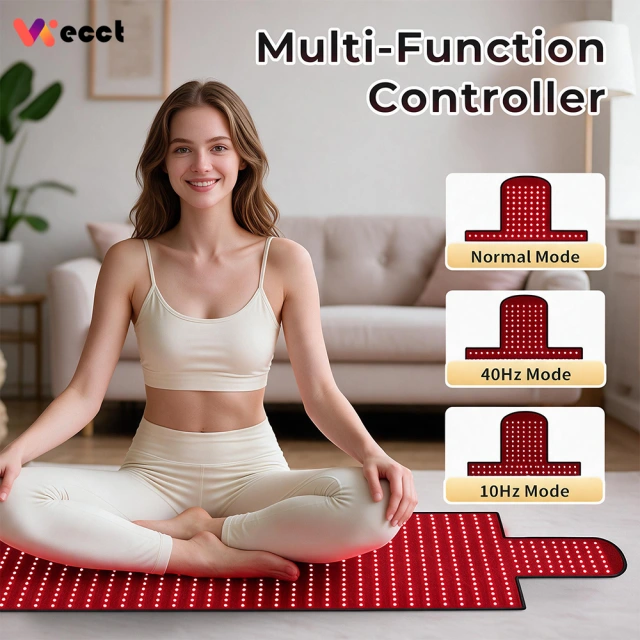
- Training several times a week — prioritise a controller with pulse modes and a 90-minute timer.
Wavelength Guide
Every recovery mat we make runs both bands. 660nm sits at the surface and 850nm reaches deeper into muscle and joint tissue. Most published recovery protocols use the pair rather than a single wavelength, which is why we do not sell single-wavelength mats.
| Band | Depth | Tissue |
|---|---|---|
| 660nm | Surface | Skin, circulation |
| 850nm | 2–5 cm | Muscle, joint, tendon |
Usage & Instructions
Typical Scenarios
- Training day — within an hour of finishing, twenty minutes on the area you trained.
- Rest day — thirty minutes full body, or skip it entirely.
- Three days out from a race — fifteen minutes, low level, legs only.
- The day after a race — thirty minutes full body, for the heaviness.
How to Use
Lie the mat flat. Set intensity low to start; most people settle on level 2 or 3 rather than 5. Use standard mode on recovery days and 10Hz the day after a hard session. Set the timer and stay off your feet for the full duration. Wipe the surface afterwards; it rolls up and stores in a bag roughly the size of a yoga mat.
Product Comparison
Three recovery formats, one question: where does it hurt, and how long do you have? The light itself is the same 660nm and 850nm on every model we sell — the difference is coverage, fit and how much of you is under it.
| Device | Coverage | Use it for |
|---|---|---|
| Belt | Lower back, knees, shoulders | One area, while you are upright |
| Mat | Half to full body | Legs and posterior chain, lying down |
| Blanket | Full body, head to feet | Rest-day sessions with nothing else scheduled |
Frequently Asked Questions
How soon after training should I use it?
Most athletes use it within twenty to sixty minutes of finishing. There is no penalty for waiting longer; it simply becomes a next-day routine instead of an immediate one. If your legs feel heavy the following morning, that session counts too.
Can I use it on a day when I trained hard?
Yes, and that is usually when it earns its keep. Use a lower level and a shorter session than on an easy day. The mat is a light source, not a stimulant — it will not add load, but it also will not make a heavy week feel light.
Will it make my soreness worse?
We cannot promise it will not, and we will not pretend otherwise. What we can tell you is what users report: heaviness often eases the next morning, and almost nobody describes the session itself as uncomfortable. If a session leaves you feeling worse, lower the level and shorten it, or stop for a few days.
Does it replace an ice bath or a foam roller?
No, and we will not claim otherwise. It is a separate tool. Some people foam roll first and use the mat afterwards; others use the mat on days when they would rather not do cold water. Use it alongside your existing routine, not instead of it.
How do I clean it between sessions?
Wipe the surface with a soft cloth after each session and let it air dry before rolling it up. The surface is a wipeable material, so no washing is needed. Keep the controller and connectors away from moisture.
Does it really fit in a gym bag?
The roll-up models compress to roughly the size of a rolled towel or a yoga mat, which fits a standard gym bag. Larger full-body mats take more room — if bag space is the deciding factor, check the folded dimension in the spec table before you order.