Recovery Wraps & Belts
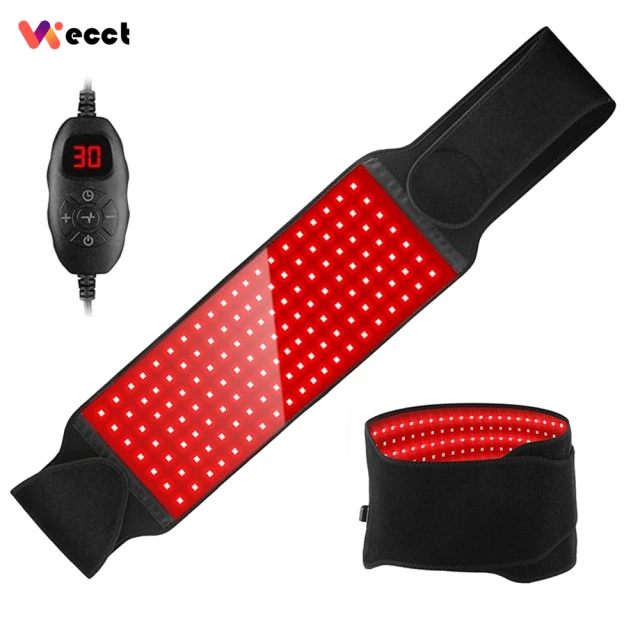
Recovery you can wear. These wraps hold 105 to 600 dual-wavelength LEDs against the back, waist, shoulders or knees while you stand, walk or sit — so the session happens during the twenty minutes you were going to spend on your phone anyway.
Showing 4 of 4 devices
How to Choose
- One sore area after a run — the 105 or 140 LED wrap covers the lower back and waist without a second purchase.
- Knees as well as back — the 210 LED wrap is cut to sit across both knees at once.
- Whole back and both shoulders — the 600 LED model is the only one in the range that reaches shoulder to shoulder.
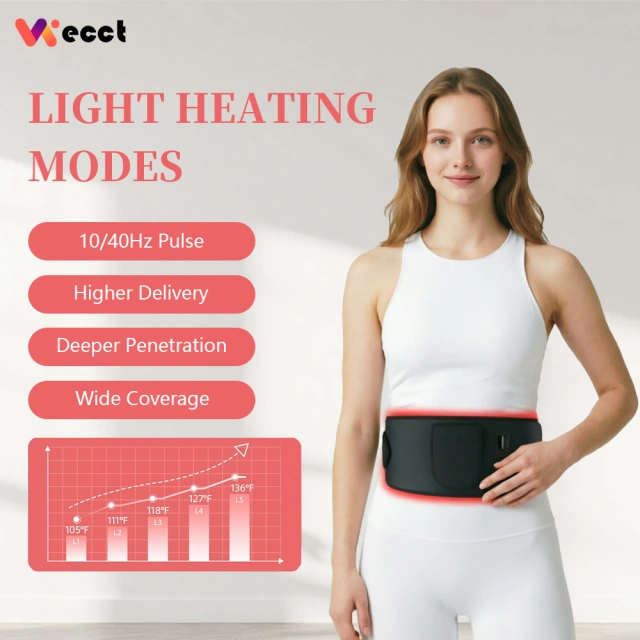
- Heat, on cold mornings — the heated model adds warmth at five levels, separate from the light settings.
Wavelength Guide
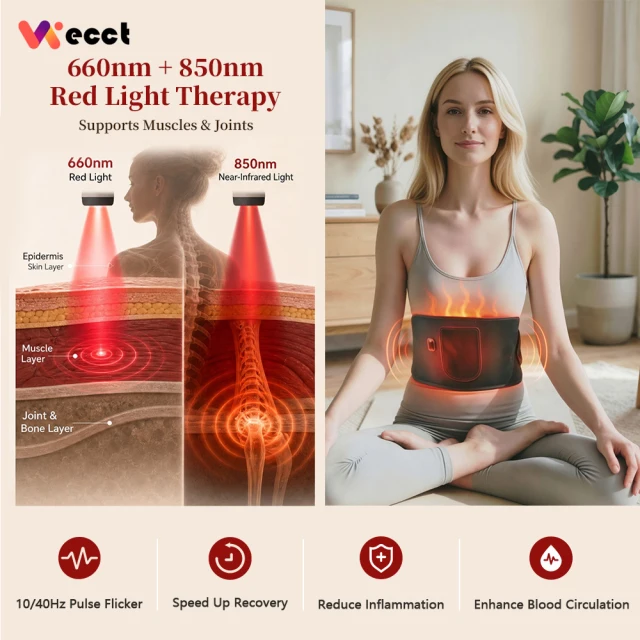
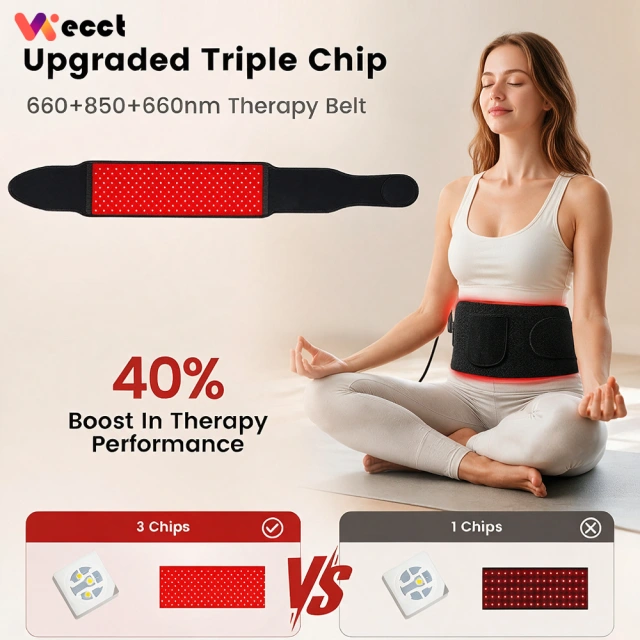
Both bands, on every wrap. 660nm works at the surface of the skin; 850nm gets into muscle, tendon and joint tissue beneath it. Recovery protocols in the published literature generally pair the two, which is why a single-wavelength wrap would be a strange thing for us to sell.
| Band | Depth | Tissue |
|---|---|---|
| 660nm | Surface | Skin, circulation |
| 850nm | 2–5 cm | Muscle, joint, tendon |
Usage & Instructions
Typical Scenarios
- Straight after a session — strap it on before you shower, while you are still warm.
- Race morning — fifteen minutes on the legs, low level, nothing new on race day.
- Travel day — USB-C power means it runs from a power bank between airports.
- Two areas in one sitting — wear it on the back, then move it to the knee for a second session.
How to Use
Wrap it snug against the skin or over a base layer and secure the strap. Start at level 2 — most people never need 5. Pick standard mode on recovery days, 10Hz or 40Hz after the hardest sessions. Set the timer; the wrap switches off on its own. Wipe the inner surface after use and let it dry before folding.
Product Comparison
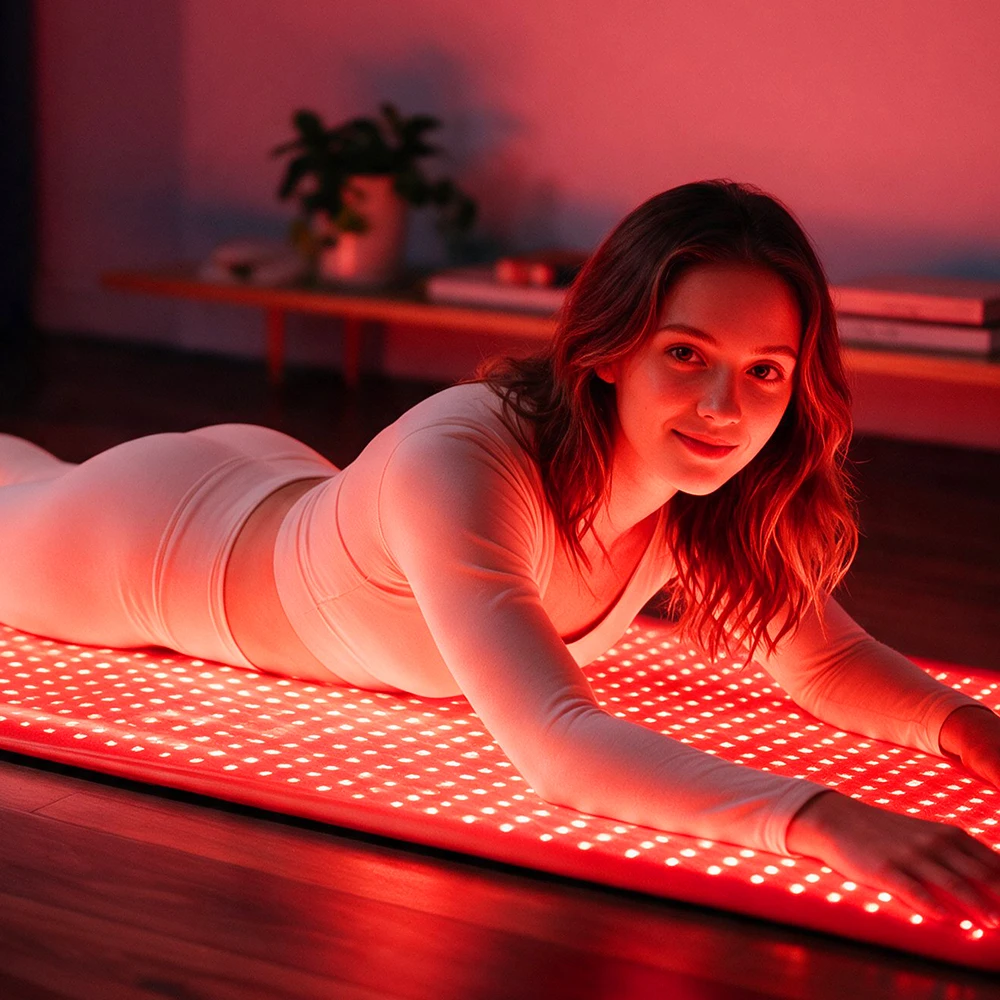
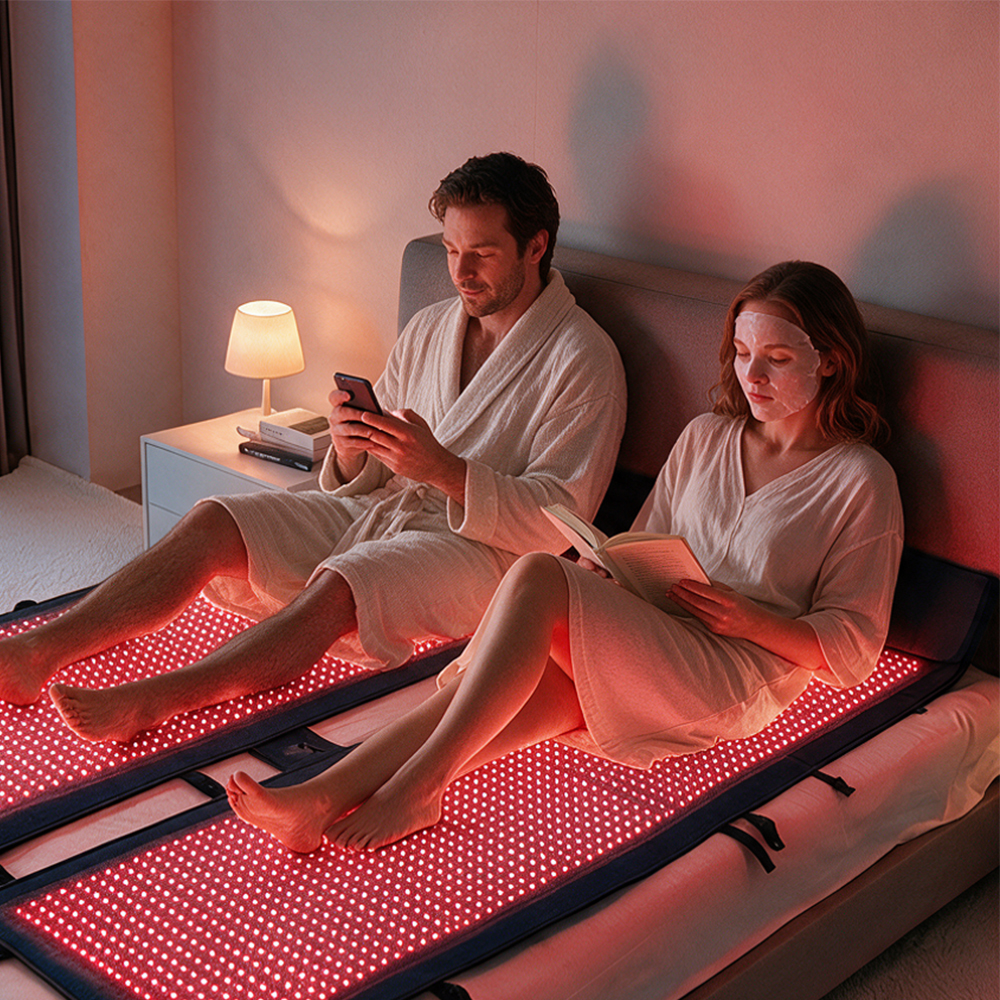
All three formats emit the same 660nm and 850nm light. Choose by where the soreness sits and whether you are willing to lie down: a wrap for one area while you are upright, a mat for legs and back while you are flat, a blanket when the whole body is the target.
| Device | Coverage | Use it when |
|---|---|---|
| Belt | One area, upright | You need both hands free |
| Mat | Legs and back, lying down | You are done for the day |
| Blanket | Full body | It is a rest day and nothing else is planned |
Frequently Asked Questions
Can I wear it over my training kit?
Yes, and that is the point. The wrap works over a base layer or directly against the skin. Thick outer layers will scatter some of the light, so keep it to one thin layer for the most consistent result.
Do I have to hold still while it is on?
No. It is strapped to you, not balanced on you. Walking around and getting on with things is fine. Just do not fold or bunch the panel while it is running.
Is the heated version hot enough to notice?
It is a gentle warmth at five levels, not a heating pad. It is there to make a cold morning session comfortable, not to produce sweat. The heat and the light settings are adjusted separately.
How long does the battery last?
The USB-C models run from a power bank; the mains models plug in. For a twenty-minute session, either is more than enough. Check the spec table on the product page you are buying for the exact power options.
How do I clean a wrap?
Wipe the inner surface with a soft damp cloth and let it dry fully before folding. Do not immerse it, and do not put it in a washing machine — there is an LED array and circuitry inside.
Which one should I get if I only buy one?
If your soreness is one clear area — lower back, or one knee — buy a wrap. If it moves around, or you would rather lie down than wear anything, buy the entry mat. Most people who train four or more times a week end up with both.