Recovery Blankets
The tool for the day after. 2570 dual-wavelength LEDs wrap the whole body, head and neck included, so a single session covers what three targeted devices would take turns doing. Fold it out, set the timer, stay there.
How to Choose
- Whole body, one session — if you do not want to move a device around, this is the only model that covers head to feet in one pass.
- The day after a long session — the 90-minute timer is what makes a long session practical without watching the clock.
- Cold rooms — the wrap-around design holds warmth as well as light, which matters more in winter.
- Storage — the soft surface folds flatter than any rigid light bed, but it is still a large item; check the folded size before you order.
Wavelength Guide
The blanket runs the same two bands as every other device we sell. 660nm acts at the skin surface, 850nm reaches muscle and joint tissue below it. Emitting both at once is what makes a single full-body session worth doing — a single-wavelength blanket would only ever address the surface.
| Band | Depth | Tissue |
|---|---|---|
| 660nm | Surface | Skin, circulation |
| 850nm | 2–5 cm | Muscle, joint, tendon |
Usage & Instructions
Typical Scenarios
- The day after a long run — thirty minutes, full body, nothing else scheduled.
- Race week taper — twenty minutes on the legs, kept short so it never becomes training.
- Post-lift leg day — lie in it while you eat, since you were not moving anyway.
- Between back-to-back sessions — fifteen minutes if you have a second session inside 24 hours.
How to Use
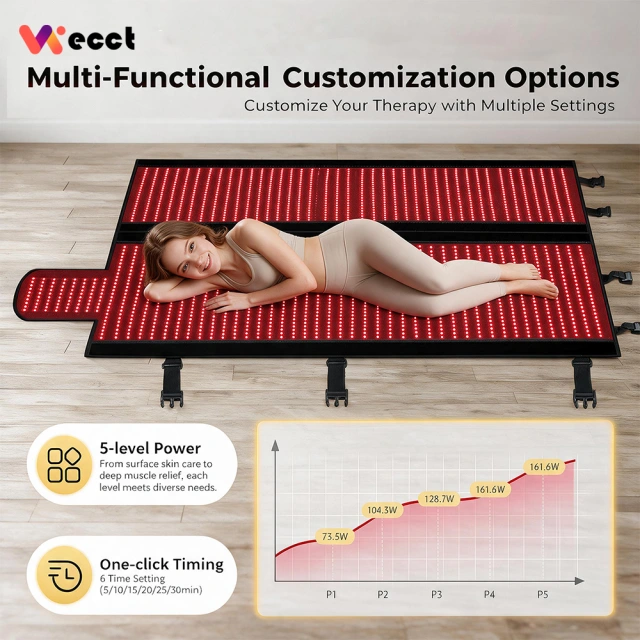
Lay the blanket out flat or wrap it around yourself, connect the controller, and pick a level. Level 2 or 3 is where most people stay. Set the timer — up to 90 minutes — and stay put. Wipe the surface after each session and fold it flat; do not crease the same line every time.
Product Comparison
Nothing about the light changes between our devices — 660nm and 850nm, every model. What changes is how much of you is under it at once. The blanket is the widest option, which makes it the least fiddly and the slowest to set up.
| Device | Coverage | Use it when |
|---|---|---|
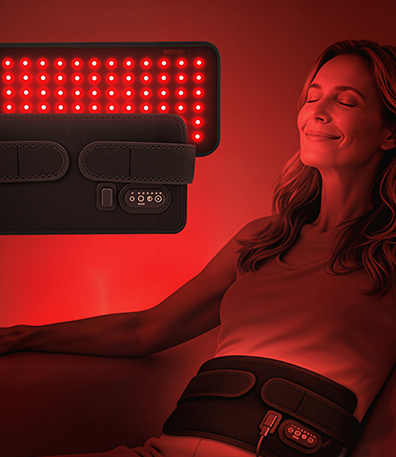
| Belt | One area, upright | You need both hands free |
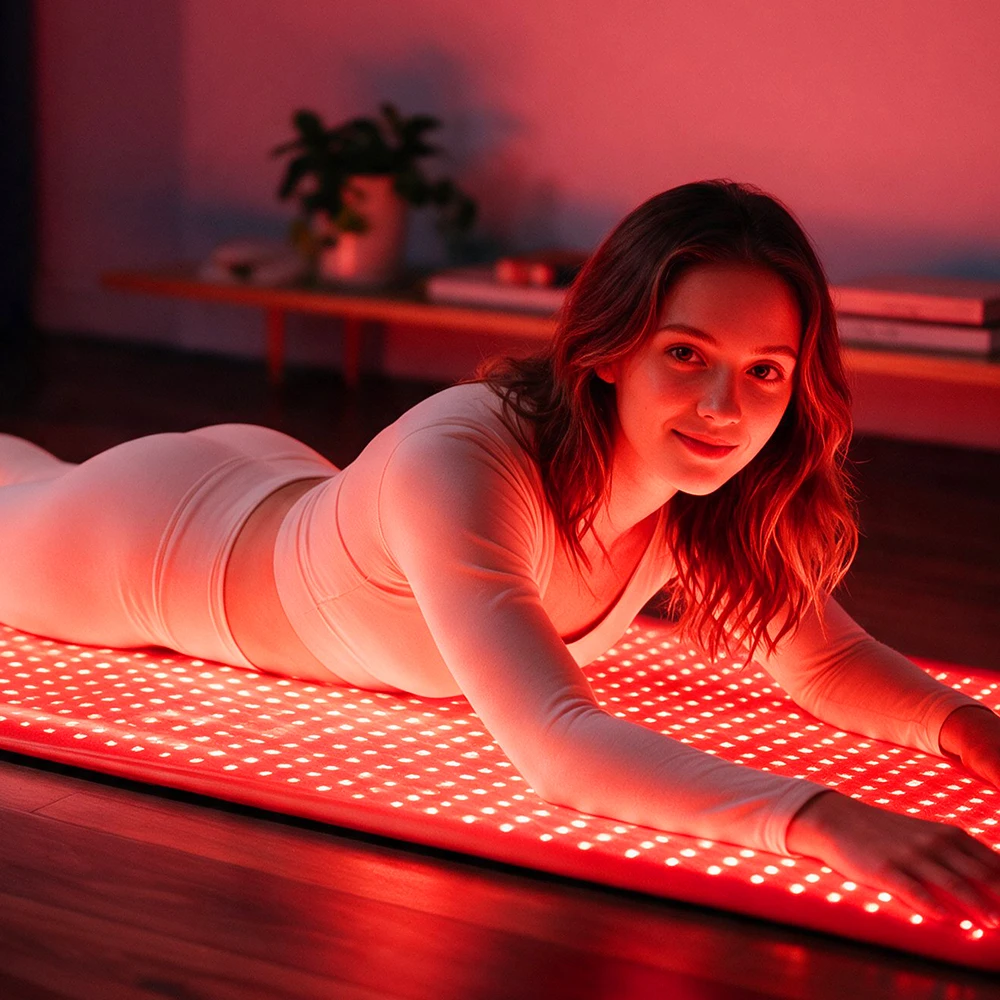
| Mat | Legs and back, lying down | You are done for the day |
| Blanket | Head to feet | Nothing else is planned |
Frequently Asked Questions
How long is a rest-day session?
Thirty minutes is the common choice. The controller allows up to 90 minutes, and people training for long events often use the longer setting the day after a big session. Do not extend the time to compensate for a missed day.
Does it cover my arms and feet?
The wrap covers head to feet when it is laid out flat and folded over you. Arms sit inside the fold rather than under a separate panel. If arms are your priority, a mat under the arms plus the blanket works better.
Is it hot to lie in?
It produces light, not heat, and the surface warms gently rather than becoming a heat source. There is no heated version of this blanket. If warmth is what you want, the heated belt is the model for that.
What is the difference between the blanket and the mat?
Coverage and setup. The mat is quicker to lay out and easier to store, and it covers legs and back well. The blanket covers everything including head and neck, takes longer to arrange, and suits sessions where you are not going anywhere anyway.
How do I store something this big?
It folds flat and stores under a bed or standing in a wardrobe. Fold it along different lines each time so the surface does not take a permanent crease. Keep sharp objects away from the fold.